Bigger Asses – An Ancient Solution to a Modern Problem
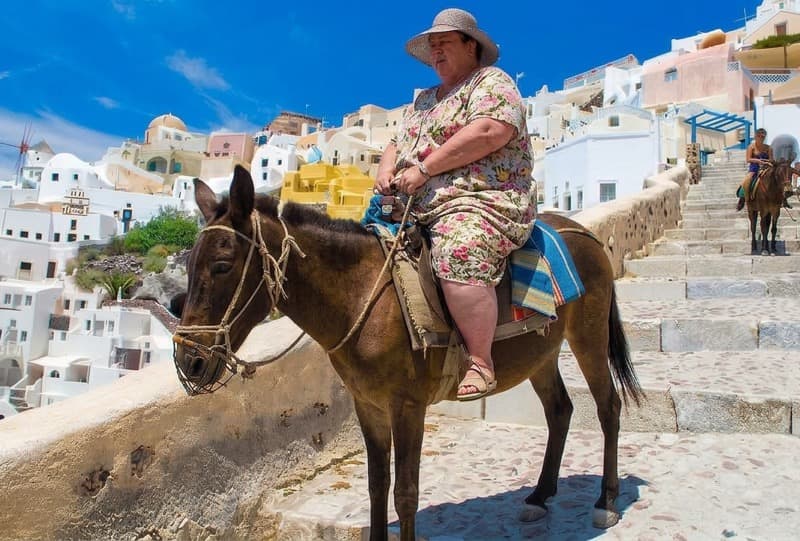
In an ironic Homeric twist, the Greek island of Santorini has begun importing “Trojan Donkeys” from Turkey.
SANTORINI, GREECE—In 2018 Greece banned fat tourists from riding Santorini’s donkeys up the 600 stair ascent from the old port to the village of Fira. Animal welfare legislation established a firm 100 kg (220 lb) maximum load limit for working donkeys, horses, and mules, equivalent to approximately one-fifth of the animal’s body weight. While animal rights groups cheered the measure intended to reduce spinal strain caused by overweight riders, officials reported a measurable decline in donkey-ride revenue since enforcement.
Many visitors, particularly those from markets with higher average body weights, primarily Americans, have opted against the climb, preferring to take the cable car. Local operators note that this shift has affected associated spending on food, souvenirs, and excursions, as heavier tourists who typically allocate more discretionary income have become less inclined to participate in traditional transport experiences. A 2024 study by the Greek Tourism Board essentially concluded that fat people like to eat and spend a lot, but don’t like to walk up stairs.
"Fat people like to eat… but don’t like to walk up stairs" —Greek Tourism Board
Something had to be done to offset the loss in revenue. Enter the Trojan Donkeys. Last month, Greek authorities began importing the specialized breed of ultra-sturdy donkeys from Turkey—direct descendants of the legendary beasts that once hauled tin ore out of the mines of Troy and across the rugged terrain of Anatolia around 3000 B.C.
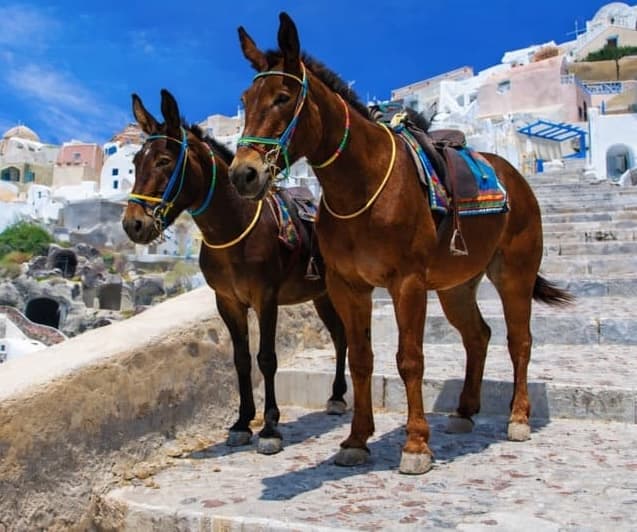 These aren’t your average Santorini donkeys. They’re Bronze-Age beasts of burden, broad-backed, thick-boned, and bulging with muscle. The Trojan’s ancient selective breeding created a larger animal suited to carrying heavy loads of metal, with a calm temperament, unrivaled endurance, and most importantly strength. No longer do cruise ships full of heavy-spending, heavy-eating visitors have to skip Santorini for other places that wouldn’t body-shame their passengers. These super donkeys can carry even the fattest tourists from America, and their suitcases too, with ease.
"These super donkeys can carry even the fattest tourists from America, and their suitcases too" —Greek Tourism Board
Preliminary assessments indicate the new donkeys comply with the one-fifth weight regulation and can accommodate a broader range of passenger profiles. Tourism representatives describe the initiative as a practical adaptation to regulatory and expanding demographic realities, allowing for the continuation of a service rooted in both ancient transportation and modern visitor preferences. Veterinary monitoring continues, and animal activists are ready to highlight any abuses they encounter. But the Tourism Board is confident, they’ve solved the problem, “Tourists started getting bigger, so the answer was simple, get bigger donkeys.” So thanks to some quick thinking Greeks and a 5000 year old strain of super donkeys, Chad from Scranton can keep eating Cheetos and get his Instagram photo while being hauled up Santorini’s caldera. It’s a win, win.
Many visitors, particularly those from markets with higher average body weights, primarily Americans, have opted against the climb, preferring to take the cable car. Local operators note that this shift has affected associated spending on food, souvenirs, and excursions, as heavier tourists who typically allocate more discretionary income have become less inclined to participate in traditional transport experiences. A 2024 study by the Greek Tourism Board essentially concluded that fat people like to eat and spend a lot, but don’t like to walk up stairs.
"Fat people like to eat… but don’t like to walk up stairs" —Greek Tourism Board
Something had to be done to offset the loss in revenue. Enter the Trojan Donkeys. Last month, Greek authorities began importing the specialized breed of ultra-sturdy donkeys from Turkey—direct descendants of the legendary beasts that once hauled tin ore out of the mines of Troy and across the rugged terrain of Anatolia around 3000 B.C.
These aren’t your average Santorini donkeys. They’re Bronze-Age beasts of burden, broad-backed, thick-boned, and bulging with muscle. The Trojan’s ancient selective breeding created a larger animal suited to carrying heavy loads of metal, with a calm temperament, unrivaled endurance, and most importantly strength. No longer do cruise ships full of heavy-spending, heavy-eating visitors have to skip Santorini for other places that wouldn’t body-shame their passengers. These super donkeys can carry even the fattest tourists from America, and their suitcases too, with ease.
"These super donkeys can carry even the fattest tourists from America, and their suitcases too" —Greek Tourism Board
Preliminary assessments indicate the new donkeys comply with the one-fifth weight regulation and can accommodate a broader range of passenger profiles. Tourism representatives describe the initiative as a practical adaptation to regulatory and expanding demographic realities, allowing for the continuation of a service rooted in both ancient transportation and modern visitor preferences. Veterinary monitoring continues, and animal activists are ready to highlight any abuses they encounter. But the Tourism Board is confident, they’ve solved the problem, “Tourists started getting bigger, so the answer was simple, get bigger donkeys.” So thanks to some quick thinking Greeks and a 5000 year old strain of super donkeys, Chad from Scranton can keep eating Cheetos and get his Instagram photo while being hauled up Santorini’s caldera. It’s a win, win.