Bill Gates Invests in Wings That Never Met a Chicken
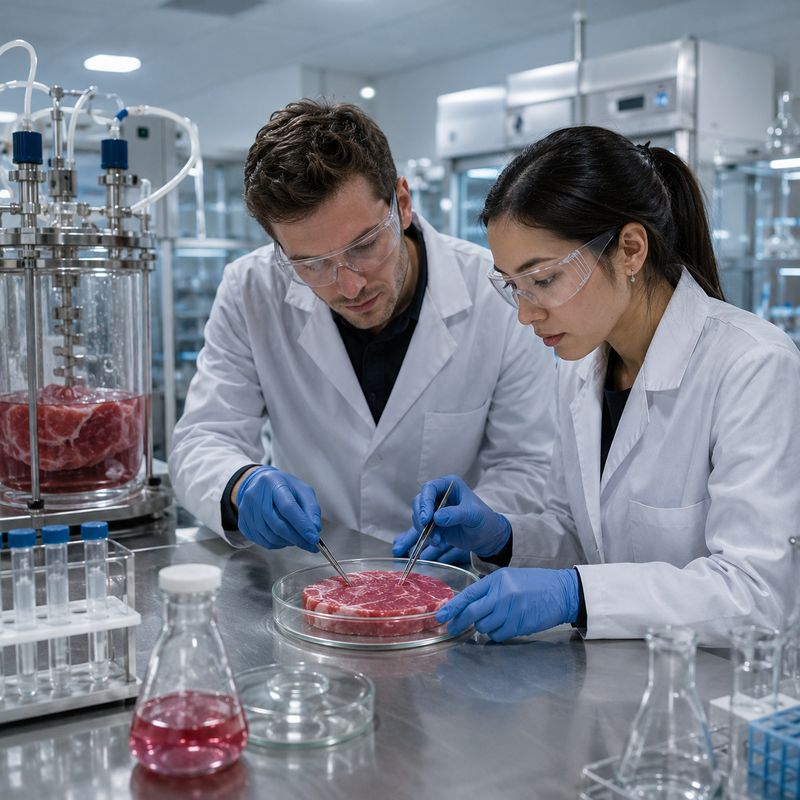
The future of meat may not require a pasture. It will, however, require several engineers.
Lab-grown meat is no longer science fiction. Scientists can now take a small sample of animal cells, place them in nutrient-rich bioreactors, and grow actual meat without raising an entire animal. Supporters say it could reduce land use, lower emissions, and provide a more efficient way to feed a growing population.
Bill Gates is among the high-profile investors betting on the technology, helping fund companies that hope to bring cultivated meat into the mainstream. Critics remain skeptical, while supporters insist the future is simply arriving ahead of schedule.
Still, some consumers have questions. For example: if meat can be grown without the animal, what other biological products might eventually skip the original source material altogether?
"Yep... tastes like chicken." –Consumer Taste Tester
Industry leaders say the possibilities are nearly endless. Milk without cows. Leather without cattle. Eggs without chickens. One startup is reportedly working on a solution for people who enjoy the concept of nature but find nature itself increasingly inconvenient. "We're removing inefficiencies from the biological supply chain," explained one executive while standing in front of a PowerPoint slide titled Things We No Longer Need.
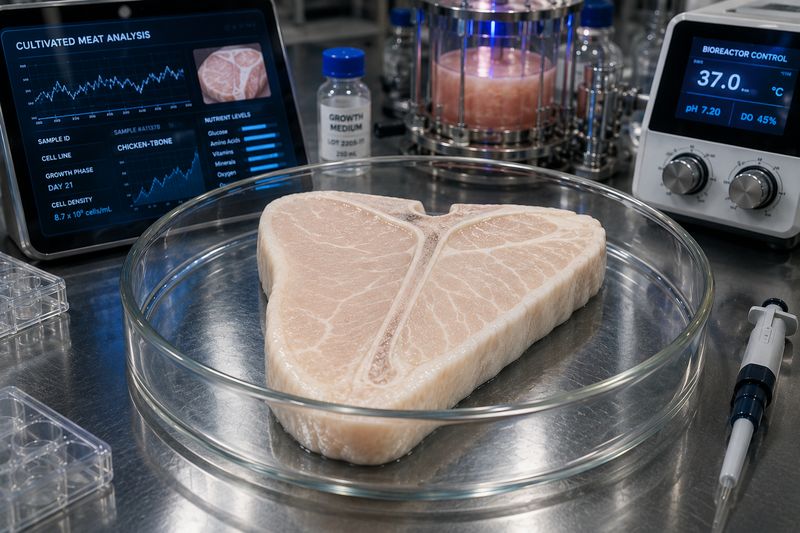 The announcement has left many consumers struggling to identify exactly where the line between agriculture and manufacturing now exists. For thousands of years, food production generally involved dirt, weather, and at least one organism having a very busy day. Increasingly, it appears those requirements may be optional. Experts stress that cultivated meat is real meat. It contains the same cells and proteins found in conventional meat. The primary difference is that one steak spent its life grazing in a field, while the other spent its life in an air-conditioned lab multiplying itself until it was ripe for the market.
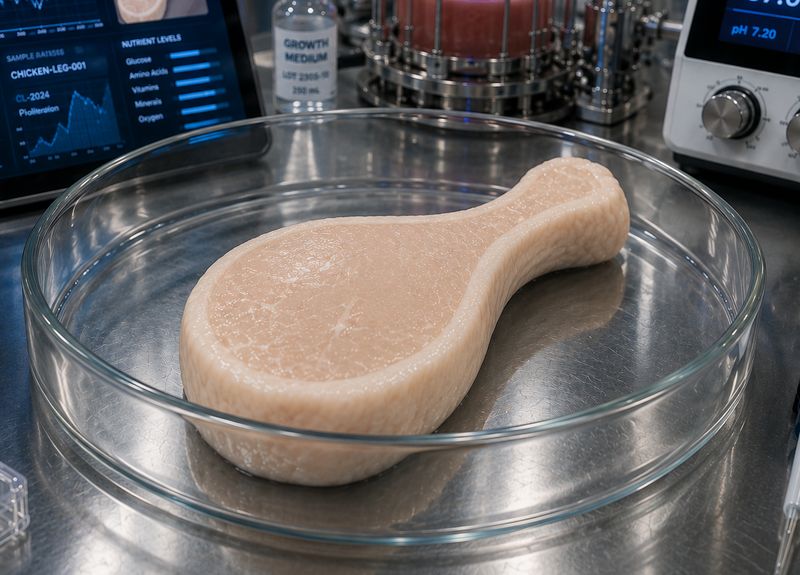 But maybe something was left on the field. In blind consumer testing, participants were surprised to discover that both the lighter-colored cultivated "T-Bone" steak and the lab-grown "drumstick" delivered a flavor profile that seemed to have taken a wrong turn somewhere between the cow and the chicken coop. Tasters agreed the experience was less "premium steakhouse" and more "Sunday grilled chicken." One participant stating, "I don't know how they grew a T-Bone steak in a lab and somehow got chicken out of it, but if nobody told me what it was, I'd have to say, Yep... tastes like chicken."
Whether lab-grown meat represents progress or just humanity's latest attempt to outsmart nature remains unclear. But as investors continue pouring billions into the effort, one thing seems certain:
The future of food may involve fewer farms, fewer animals, and significantly more people assuring us that everything is completely normal.
Bill Gates is among the high-profile investors betting on the technology, helping fund companies that hope to bring cultivated meat into the mainstream. Critics remain skeptical, while supporters insist the future is simply arriving ahead of schedule.
Still, some consumers have questions. For example: if meat can be grown without the animal, what other biological products might eventually skip the original source material altogether?
"Yep... tastes like chicken." –Consumer Taste Tester
Industry leaders say the possibilities are nearly endless. Milk without cows. Leather without cattle. Eggs without chickens. One startup is reportedly working on a solution for people who enjoy the concept of nature but find nature itself increasingly inconvenient. "We're removing inefficiencies from the biological supply chain," explained one executive while standing in front of a PowerPoint slide titled Things We No Longer Need.
The announcement has left many consumers struggling to identify exactly where the line between agriculture and manufacturing now exists. For thousands of years, food production generally involved dirt, weather, and at least one organism having a very busy day. Increasingly, it appears those requirements may be optional. Experts stress that cultivated meat is real meat. It contains the same cells and proteins found in conventional meat. The primary difference is that one steak spent its life grazing in a field, while the other spent its life in an air-conditioned lab multiplying itself until it was ripe for the market.
But maybe something was left on the field. In blind consumer testing, participants were surprised to discover that both the lighter-colored cultivated "T-Bone" steak and the lab-grown "drumstick" delivered a flavor profile that seemed to have taken a wrong turn somewhere between the cow and the chicken coop. Tasters agreed the experience was less "premium steakhouse" and more "Sunday grilled chicken." One participant stating, "I don't know how they grew a T-Bone steak in a lab and somehow got chicken out of it, but if nobody told me what it was, I'd have to say, Yep... tastes like chicken."
Whether lab-grown meat represents progress or just humanity's latest attempt to outsmart nature remains unclear. But as investors continue pouring billions into the effort, one thing seems certain:
The future of food may involve fewer farms, fewer animals, and significantly more people assuring us that everything is completely normal.