Cone of Shame Finds New Application in Men's Health, Doctors Report
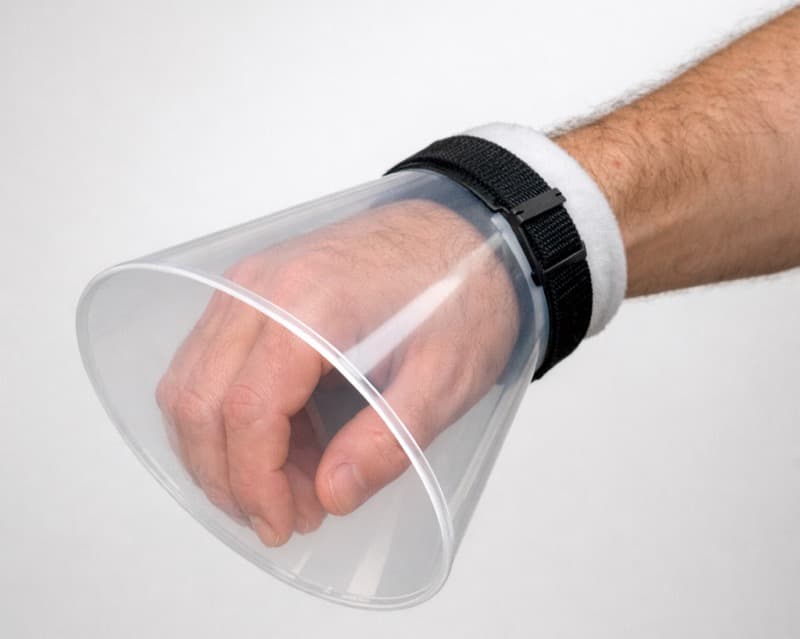
Riverside, CA — Dr. Marcus Feldstein has performed over 2,000 vasectomies in his 18-year career as a urologist, but he says the biggest challenge has never been the procedure itself. It's what patient do during the mandatory seven-day recovery period.
"We tell them no physical exertion, no heavy lifting, and absolutely no sexual activity or masturbation for at least a week," Feldstein explained from his office at Riverside Men's Health Center. "About 40 percent ignore that last part within the first 48 hours."
The consequences can include hematomas, prolonged swelling, and delayed healing that extends recovery from one week to several. After a patient arrived for a follow-up appointment with significant complications he attributed to "testing the equipment," Feldstein had what he describes as "a practical realization."
"I'd just picked up my dog from the vet after a neutering procedure," Feldstein said. "He was wearing one of those cone collars. The lightbulb went off."
Feldstein now offers patients what he calls "compliance assistance" in the form of veterinary Elizabethan collars, the rigid plastic cones typically used to prevent animals from licking surgical sites. The cones, which extend 12 to 14 inches from the neck, make it physically difficult to reach the groin area.
"It's not mandatory," Feldstein clarified. "But I strongly recommend it for patients who've indicated poor impulse control or expressed skepticism about the recovery guidelines."
Bradley Hutchins, 37, wore the cone for five days following his procedure in March. "It was humiliating," Hutchins said. "I couldn't drive. I had to eat meals leaning over the table like a Labrador. My wife thought it was hilarious."
When asked if he'd followed the recovery guidelines, Hutchins paused. "To the letter," he said.
Dr. Sandra Okonkwo, a urologist at Pacific Medical Group, has adopted a similar protocol after learning about Feldstein's approach at a medical conference.
"Vasectomy has a 99 percent success rate with proper recovery," Okonkwo said. "That drops when patients resume sexual activity prematurely. The cone eliminates the temptation and the excuses."
PetSmart corporate communications confirmed they've noticed "unusual bulk purchasing patterns" of large-size recovery cones from several medical offices in California and Arizona, though they declined to speculate on the reason.
Not all patients comply willingly. Feldstein noted that one patient returned the cone after two days, claiming it was "defective." Upon examination, Feldstein discovered the patient had carefully cut strategic access ports in the plastic with kitchen shears.
"That actually made it worse," Feldstein said. "He came back a week later with an infection."
The American Urological Association has not issued guidance on cone collar usage, with spokesperson Dr. Patricia Mendez stating the organization was "reviewing the practice and its implications for patient dignity."
As of press time, Feldstein reported his post-vasectomy complication rate has dropped 35 percent since implementing the cone protocol. He's currently exploring whether the approach might work for other procedures requiring temporary abstinence.
"I'm a problem-solver," Feldstein said. "Sometimes the best solutions come from unexpected places."