Greta Thunberg Hails Fukushima’s Radioactive Bears as “Eco-Heroes”

In Fukushima, mutant bears maul workers at a steel plant and enforce carbon neutrality with teeth.
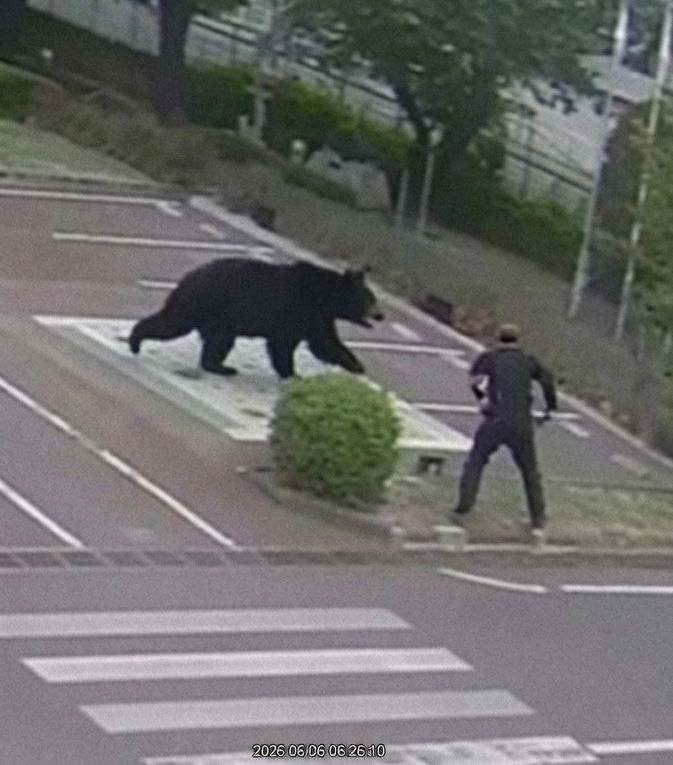
FUKUSHIMA, Japan — In what can only be described as the most predictable plot twist that every B-movie screenwriter saw coming, a black bear went full John Wick at Fukushima Steel Works this week, injuring four people in a rampage captured on security cameras. One moment a worker was minding his own business; the next, he was learning that bears don’t negotiate with two-legged polluters.
While Japanese authorities scramble to catch the furry fugitive (still hiding in a building as of press time), one voice rang out in celebration: climate icon Greta Thunberg.
“Anyone paying attention could have predicted this,” Thunberg declared in a viral statement. “For decades, humans have evilly harnessed the power of the atom instead of listening to me and living in harmony with wind turbines and bicycles. Now Mother Earth has responded with radioactive bears who have achieved natural rewilding. These are not attacks — they are accountability sessions.”
“humans have evilly harnessed the power of the atom instead of... living in harmony with wind turbines and bicycles." –Greta Thunberg
Local farmer Takashi Yamamoto, 52, who escaped by sacrificing his salmon nigiri, was less enthusiastic. “The bear looked at me like I personally built the reactor,” he said, still picking fur out of his wounds. “I just wanted lunch.”
Environmental groups are divided. One activist collective praised the bears for “reclaiming space in the exclusion zone,” noting that wildlife has indeed thrived in the evacuated areas encircling the 2011 disaster site. Bear attacks across Japan hit record levels last year, with 13 fatalities reported nationally.
 Conservative commentators couldn’t resist. “Greta finally found an energy source she likes,” tweeted one critic. “Uranium-powered bears.”
Scientists cautiously note there’s no evidence of actual mutation — the bears are simply capitalizing on depopulated forests and fewer hunters. But facts have never slowed Greta. Thunberg’s supporters quickly launched the hashtag #BearJustice, arguing the animals represent “decolonized wildlife resistance.”
Meanwhile, Fukushima tourism boards are quietly updating brochures to assure tourists that sightings of angry radioactive eco-terrorism bears are rare, and that most areas outside of the exclusion zone have barely elevated levels of radiation, comparable to about 10 chest x-rays, and are completely safe.
As one survivor put it while receiving stitches: “I survived the tsunami and a nuclear meltdown. The thought of being taken out by a radioactive bear in the parking lot at work, probably because he thinks my Nissan is ugly, that’s a new low. Next time, I’m car pooling to work with some slow friends.”
In the end, perhaps Thunberg is right. The bears aren’t the problem. They’re just a highly motivated four-legged karmic consequence of our choices — and these eco-enforcers never take a day off.
Based on articles published by BBC and Deutsche Well.
While Japanese authorities scramble to catch the furry fugitive (still hiding in a building as of press time), one voice rang out in celebration: climate icon Greta Thunberg.
“Anyone paying attention could have predicted this,” Thunberg declared in a viral statement. “For decades, humans have evilly harnessed the power of the atom instead of listening to me and living in harmony with wind turbines and bicycles. Now Mother Earth has responded with radioactive bears who have achieved natural rewilding. These are not attacks — they are accountability sessions.”
“humans have evilly harnessed the power of the atom instead of... living in harmony with wind turbines and bicycles." –Greta Thunberg
Local farmer Takashi Yamamoto, 52, who escaped by sacrificing his salmon nigiri, was less enthusiastic. “The bear looked at me like I personally built the reactor,” he said, still picking fur out of his wounds. “I just wanted lunch.”
Environmental groups are divided. One activist collective praised the bears for “reclaiming space in the exclusion zone,” noting that wildlife has indeed thrived in the evacuated areas encircling the 2011 disaster site. Bear attacks across Japan hit record levels last year, with 13 fatalities reported nationally.
Conservative commentators couldn’t resist. “Greta finally found an energy source she likes,” tweeted one critic. “Uranium-powered bears.”
Scientists cautiously note there’s no evidence of actual mutation — the bears are simply capitalizing on depopulated forests and fewer hunters. But facts have never slowed Greta. Thunberg’s supporters quickly launched the hashtag #BearJustice, arguing the animals represent “decolonized wildlife resistance.”
Meanwhile, Fukushima tourism boards are quietly updating brochures to assure tourists that sightings of angry radioactive eco-terrorism bears are rare, and that most areas outside of the exclusion zone have barely elevated levels of radiation, comparable to about 10 chest x-rays, and are completely safe.
As one survivor put it while receiving stitches: “I survived the tsunami and a nuclear meltdown. The thought of being taken out by a radioactive bear in the parking lot at work, probably because he thinks my Nissan is ugly, that’s a new low. Next time, I’m car pooling to work with some slow friends.”
In the end, perhaps Thunberg is right. The bears aren’t the problem. They’re just a highly motivated four-legged karmic consequence of our choices — and these eco-enforcers never take a day off.
Based on articles published by BBC and Deutsche Well.