AquaCompute: Where Cloud Infrastructure Meets the Lazy River
While some guests have raised concerns about data quality, park officials assure them that “governance is on the roadmap.”
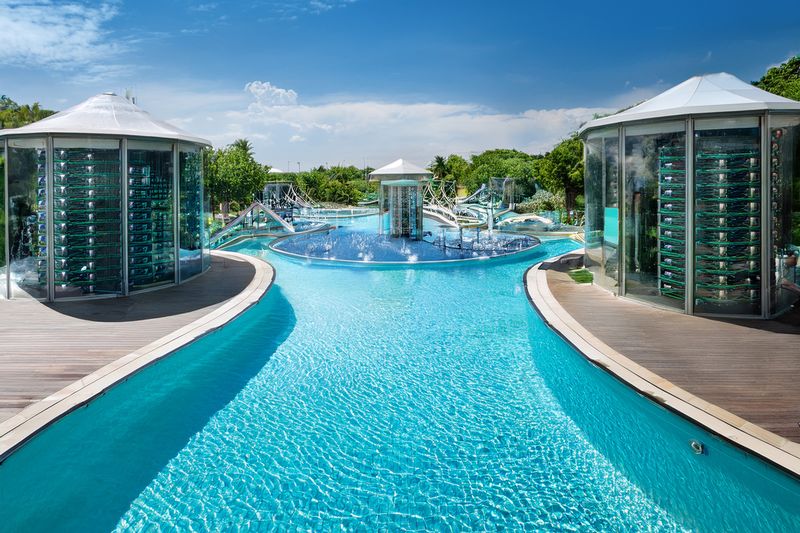
Phoenix, AZ — In a bold move that industry leaders are calling “hydraulically synergistic,” a coalition of hyperscale cloud providers announced the launch of the world’s first hybrid data center–waterpark facilities. The initiative, branded as AquaCompute™, promises to conserve water by “reimagining evaporation as a shared service.”
The concept is elegantly simple. Data centers require vast cooling systems, while waterparks require vast quantities of water. By merging the two, executives claim they have unlocked “circular liquidity optimization,” a phrase that analysts agree sounds impressive enough to delay follow-up questions.
Visitors to the flagship site in Arizona are greeted by the Kubernetes Wave Pool, where containerized workloads scale dynamically with the tides. When demand spikes, so do the waves, occasionally splashing unsuspecting guests with what a spokesperson described as “lightly processed, enterprise-grade cooling runoff.”
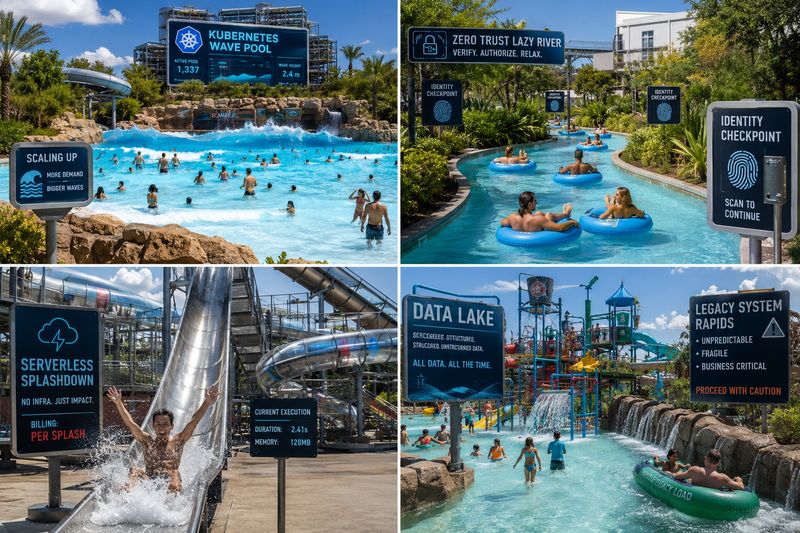 Thrill-seekers can queue for the Zero Trust Lazy River, which requires continuous identity verification at every bend. Riders report a mildly relaxing experience, interrupted only by periodic authentication challenges and a strict “never trust, always verify” lifeguard policy.
For those seeking a faster experience, the Serverless Splashdown eliminates the need for traditional infrastructure entirely. Riders are launched down a chute with no visible support system, billed only for the duration of their descent. “You don’t pay for the slide,” explained a product manager. “You pay for the splash.”
Children and adults alike are drawn to the Data Lake, a sprawling attraction where structured and unstructured swimmers coexist in murky harmony. While some guests have raised concerns about data quality, park officials assure them that “governance is on the roadmap.”
 Perhaps the most controversial feature is the Legacy System Rapids, a creaking, unpredictable ride built on decades-old plumbing. Engineers have attempted multiple modernization efforts, but each upgrade risks breaking critical downstream flows. As one executive admitted, “It’s fragile, but it’s business-critical.”
Environmental groups remain cautiously optimistic. Early reports suggest the parks reduce net water waste by recycling cooling runoff directly into attractions, though critics note that evaporation metrics are “still being aligned across stakeholders.”
Despite skepticism, bookings are strong. Corporate teams are particularly drawn to the Executive Dashboard Cabana, which offers real-time metrics on ride throughput, splash efficiency, and guest satisfaction KPIs.
As AquaCompute™ expands globally, one thing is clear: in the race to optimize resources, even the line between infrastructure and entertainment is no longer immutable. Or, as the company’s slogan puts it, “Why waste water when you can monetize it?”
The concept is elegantly simple. Data centers require vast cooling systems, while waterparks require vast quantities of water. By merging the two, executives claim they have unlocked “circular liquidity optimization,” a phrase that analysts agree sounds impressive enough to delay follow-up questions.
Visitors to the flagship site in Arizona are greeted by the Kubernetes Wave Pool, where containerized workloads scale dynamically with the tides. When demand spikes, so do the waves, occasionally splashing unsuspecting guests with what a spokesperson described as “lightly processed, enterprise-grade cooling runoff.”
Thrill-seekers can queue for the Zero Trust Lazy River, which requires continuous identity verification at every bend. Riders report a mildly relaxing experience, interrupted only by periodic authentication challenges and a strict “never trust, always verify” lifeguard policy.
For those seeking a faster experience, the Serverless Splashdown eliminates the need for traditional infrastructure entirely. Riders are launched down a chute with no visible support system, billed only for the duration of their descent. “You don’t pay for the slide,” explained a product manager. “You pay for the splash.”
Children and adults alike are drawn to the Data Lake, a sprawling attraction where structured and unstructured swimmers coexist in murky harmony. While some guests have raised concerns about data quality, park officials assure them that “governance is on the roadmap.”
Perhaps the most controversial feature is the Legacy System Rapids, a creaking, unpredictable ride built on decades-old plumbing. Engineers have attempted multiple modernization efforts, but each upgrade risks breaking critical downstream flows. As one executive admitted, “It’s fragile, but it’s business-critical.”
Environmental groups remain cautiously optimistic. Early reports suggest the parks reduce net water waste by recycling cooling runoff directly into attractions, though critics note that evaporation metrics are “still being aligned across stakeholders.”
Despite skepticism, bookings are strong. Corporate teams are particularly drawn to the Executive Dashboard Cabana, which offers real-time metrics on ride throughput, splash efficiency, and guest satisfaction KPIs.
As AquaCompute™ expands globally, one thing is clear: in the race to optimize resources, even the line between infrastructure and entertainment is no longer immutable. Or, as the company’s slogan puts it, “Why waste water when you can monetize it?”